Worker Web
Tracking India's Workers
Worker Web tracks India’s Workers and its Labour Economy
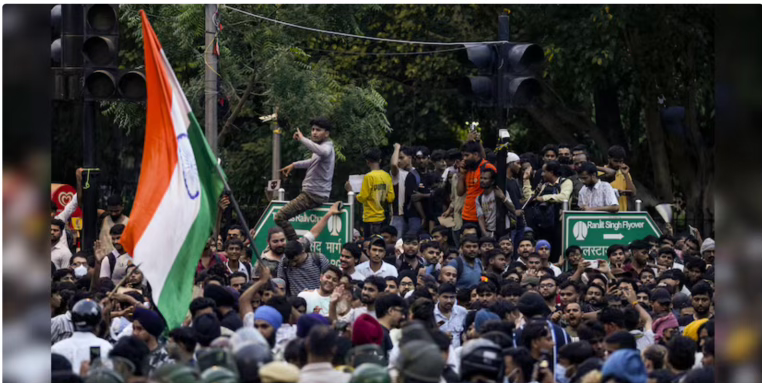
Who are the NEET takers?
Is NEET the predominantly middle class phenomenon it is being made out to be?
Last week author and commentator Rama Bijapurkar described this characterisation as “dead wrong.” In The cultural meaning of Neet: Saving faith in India’s exam system,
she says a large part of National Eligibility cum Entrance Test (Undergraduate) or Neet takers are first-generation college goers from lower-income homes, with parents who are poorly educated and employed in low and unpredictable income occupations. They take Neet because increasingly it is the default entry gateway for seats in fields such as nursing (popular among girls), veterinary science, alternative medicine, physiotherapy, and allied health care. The aspiration is to become middle class. She cites stories of people based on her ethnographic research, and says “the symbolism of Neet and other competitive exams
is that they are perceived as merit based opportunities open to all, offering a shot at getting to a higher life orbit.”
This PTI story, NEET UG 2022: 20 students from underprivileged families passed with flying colours had reported in 2022 that in order to fulfil their aspirations of becoming doctors, Amrita Sahu, the daughter of a daily wage worker in Odisha, and 19 other youngsters from impoverished families passed the NEET exam with the help of a humanitarian organisation. The NGO handled their transportation, lodging, and boarding needs and gave them study aids and tips on how to succeed in the All India Medical Entrance Examination.
Pallavi Aiyar writing in the Times of India on what public examinations mean for India and China says the two countries have converged on the same instrument—the competitive public exam—because these promise a fair shot in fairly unequal societies, “the one guaranteed shot at a better life.” In China it is called the gaokao, and the Chinese Communist Party devotes extraordinary attention to getting it right. She describes how exam papers travel and are stored like state secrets, even as teachers who develop the exam questions are reportedly confined for about a month in secure facilities: Two Nations Of The Exam.
The cultural meaning of Neet: Saving faith in India’s exam system,
NEET UG 2022: 20 students from underprivileged families passed with flying colours
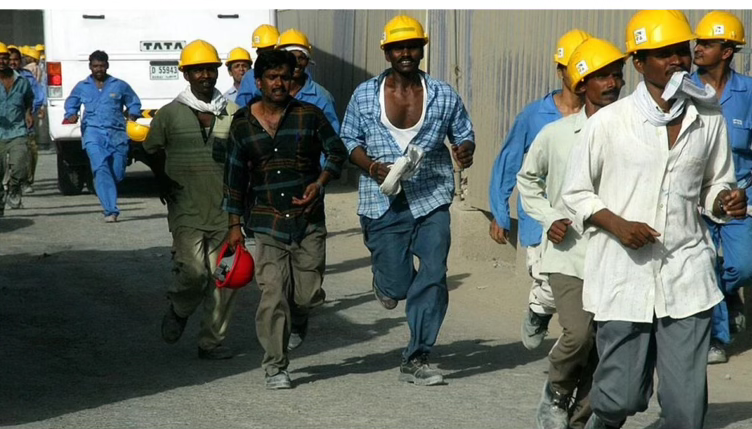
Its getting tougher for Gulf migrants
The news on Indian workers from the Gulf region over the past week, has been grim.The Ministry of External Affairs (MEA) has confirmed that 16 Indian nationals, including 10 seafarers, have lost their lives amid the ongoing West Asia crisis linked to the escalating US-Iran conflict. And over the last three years, no less than 1,340 Indian citizens died by suicide in the Gulf countries, according to data provided by the Ministry of External Affairs (MEA) in Parliament, with the highest number being in the UAE (511).
Around one crore Indian citizens and persons of Indian origin are currently living in the Gulf region, according to the Indian Express report.
Adding to the general distress, the Indian government’s recent hike in passport renewal fees adds to the pressure of rising food and rent costs of migrant workers in the UAE, threatening the vital remittances they send home to support their families, themgrationstory.com reports. The fee for a standard 36-page passport rose to 2,500 rupees from 1,500 rupees this month. For Indians living in the UAE, the cost of renewing a passport increased from 285 Emirati dirhams, roughly 7,125 rupees, to 450 Emirati dirhams, around 11,700 rupees. Add to that the wages lost in travelling to the passport renewal centre and missing a day’s work.
UAE tops list as 1,340 Indians die by suicide across Gulf in three years
West Asia Crisis Deepens: MEA Confirms Death Of 16 Indians Amid US-Iran Conflict | Full Details
The hidden financial burden of passport renewals for Indian workers in the Gulf
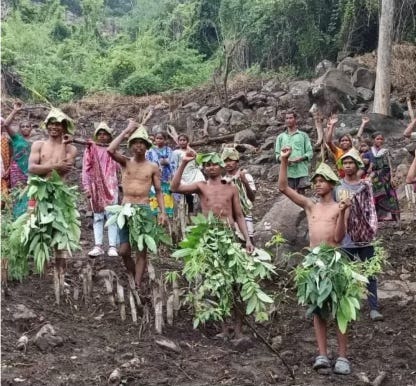
A crisis brews for Andhra Pradesh’s tribal youth
For thousands of tribal youth in the Scheduled Areas of Andhra Pradesh, the promise of India’s demographic dividend rings hollow. Across Alluri Sitarama Raju, Parvathipuram Manyam, and Polavaram districts, a generation finds itself caught between soaring aspirations and the hard grind of structural exclusion.
“Education has expanded across the region over the past two decades. Schools, Ashram institutions, and residential hostels have reached even remote hamlets, and enrolment has risen. But access has not translated into meaningful learning or opportunity. A staggering number of tribal students drop out after Class X or Intermediate, not because they lack ability, but because they fail exams or, more often, have no one to guide them on what to do next. Career counselling is virtually non-existent…For first-generation learners, the choices between science, arts, commerce, or vocational training are made in the dark, with parents who have little formal education themselves and cannot offer direction.”
Because limited education leads to limited employment, migration has become the default livelihood strategy for thousands of young tribal men and women who leave their villages to work in construction, poultry farms, hotels, and shops in towns and cities.
Meanwhile the Hindu reports that hundreds of tribal youth from the Agency areas of Alluri Sitharama Raju district languish in jail after getting caught with ganja and charged under the stringent NDPS Act, 1985. Many had been lured into the smuggling network by the drug mafia. Extreme poverty, lack of employment opportunities and ignorance of consequences led them into becoming drug mules.
Andhra’s tribal generation at risk: The quiet crisis in scheduled areas
Lure of better life turns tribal youth into drug mules

Terror targets Migrants
The price of travelling from Chhattisgarh to Kashmir with your family to earn 150-250 more per day in a brick kiln, can be death, if you run out of luck. Deepak and Bhupinder paid that price last month-end in South Kashmir’s Kulgam district. They were also cremated there.
Deepak’s wife and mother had also been working alongside him.
This was Deepak’s fifth journey to work there and Bhupinder’s second. The Indian Express reports that brick kilns in the Valley are staffed almost entirely by migrant workers, who also stay on site due to high demand and a limited working season. More than 15 migrant workers have been killed in terror attacks in J&K since 2021. Over the past two decades, migrant labourers have become an integral part of Kashmir’s economy. These workers live in huts at the brick kilns, most of which are in secluded areas. Providing security to every non-local worker is challenging, the police say. There are thousands of non-local labourers working at the brick kilns, and many of them have come along with their families. These kilns are scattered across villages. “What we plan to do is move them and their families to a single location in the same village for the night, so that it is easier to secure them.” This month the decision taken in a meeting with the Lieutenant Governor has been to move them to specific clusters and step up surveillance and night patrolling.
Terrorists target 2 migrant workers in South Kashmir, 1 dead
In Kashmir for better pay, the 2 migrants who never made it home
After terror attack, J&K plans to move migrant workers to clusters
Sewer Cleaners die, as States Ignore the Supreme Court
The Supreme Court’s repeated orders on manual scavenging and sewer cleaning deaths have been ignored by state governments since 2023. Last week it issued notices to the Chief Secretaries of five states asking why contempt proceedings should not be initiated against them for failing to prevent manual scavenging deaths despite its 2023 directions. In October 2023 the Supreme Court passed a slew of directions to eradicate the menace and also enhanced the compensation in cases of sewer deaths to Rs. 30 lakhs. In January 2025 it banned sewer cleaning and manual scavenging in 6 metros. But the practices continue and the deaths continue to occur.
The New Indian Express reports that Amicus Senior Advocate K Parameshwar submitted that 46 deaths were reported in 2025 and 54 in 2024 as per Parliament data. State-wise, Maharashtra reported 17 deaths in 2024, Tamil Nadu 12, Rajasthan 13, besides Gujarat and Uttar Pradesh.”
The apex court directed the Chief Secretaries to file affidavits within 4 weeks showing cause why contempt should not be initiated for wilful disobedience of its earlier orders and its 2025 ban.
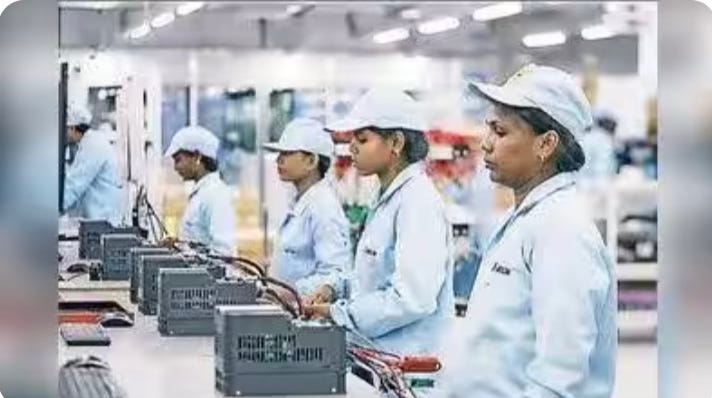
Electronics manufacturing draws women to factory floors
Foxconn, the Taiwanese multinational corporation which is the world’s largest contract electronics manufacturer, is rapidly expanding operations in India and in the process drawing women to enter factory floors in unprecedented numbers. Of the around 26,000 people Foxconn’s Bengaluru campus employs, 21,780 are women, and nearly 16,500 of the total are contract workers. These are first generation factory workers from Karnataka, Andhra Pradesh and Tamilnadu. The company buses them in to its campus at Devanhalli and also accommodates them in women’s hostels.
As electronics production accelerates under the government’s Production Linked Incentive (PLI) scheme multinationals are expanding their India operations. Foxconn’s Tamil Nadu operations employ about 41,000 people. This Times of India report says electronics manufacturing has become one of the state’s largest employment generators. The state has 19,177 registered industries employing nearly 1.9 million workers. Women account for 5.9 lakh workers, or 30.4% of Karnataka’s industrial workforce. Industry executives are quoted as saying that the recent labour reforms which allow women to work night shifts with safety measures and transport provided, are contributing to this trend.
Foxconn says it also offers employees a wide range of professional development opportunities, including training in highly sought after technical and professional skills like robotics and smart manufacturing. The higher wages the company pays are also impacting the local labour market.
In electronics factories across India women are taking the floor